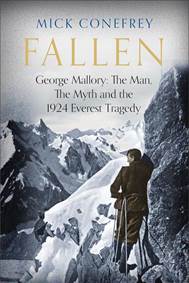
Fallen : George Mallory: The Man, The Myth and the 1924 Everest Tragedy
Knihu kúpite v
1 e-shope
od
27,08 €
Ak sa vám po kliknutí na tlačidlo "Do obchodu" nezobrazí stránka knihy vo vybranom e-shope, je potrebné vypnúť AdBlock vo vašom prehliadači pre našu stránku.
Návod na vypnutie je napríklad na adrese https://www.sme.sk/dok/20466299/ako-vypnut-adblock-na-sme-sk-whitelist.
Krátky popis
On 6 June, 1924 George Mallory donned an oxygen set and set off for
the summit of Everest with his young partner Andrew Irvine. Next
day they were glimpsed through clouds heading upwards, but after
that they were never seen again. Whether they died on the way up or
on the way down no one knows.In the years following his
disappearance, Mallory was elevated into an all-British hero.
Dubbed by his friends the 'Galahad' of Everest, he was lionised in
the press as the greatest mountaineer of his generation who had
died while taking on the ultimate challenge. Handsome, charismatic,
daring, he was a skilled public speaker, an athletic and
technically gifted climber, a committed Socialist and a supremely
attractive figure to both men and women.His friends ranged from the
gay artists and writers of the Bloomsbury group to the best
mountaineers of his era. But that was only one side to him. Mallory
was also a risk taker who according to his friend and biographer
David Pye, could never get behind the wheel of a car without
overtaking the vehicle in front, a climber who pushed himself and
those around him to the limits, a chaotic technophobe who was
forever losing equipment or mishandling it, the man who led his
porters to their deaths in 1922 and his young partner to his
uncertain end in 1924.So who was the real Mallory and what were the
forces that made him and ultimately destroyed him? Why did the man
who denounced oxygen sets as 'damnable heresy' in 1922 perish on an
oxygen-powered summit attempt two years later? And above all, what
made him go back to Everest for the third time? Based on diaries,
letters, memoirs and thousands of contemporary documents, Fallen is
both a forensic account of Mallory's last expedition to Everest in
1924 and an attempt to get under his skin and separate the man from
the myth.
Výber kníh autorov
Mick Conefrey ,
Atlantic Books




Zobraziť všetky knihy autora
Mick Conefrey,
Atlantic Books
Výber kníh vydavateľa
Slovart

Zobraziť všetky knihy vydavateľa
Slovart
Naše tipy