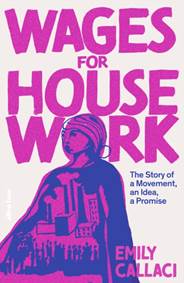
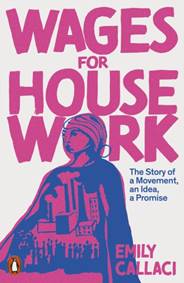
Wages for Housework
Knihu kúpite v
2 e-shopoch
od
17,05 €
Ak sa vám po kliknutí na tlačidlo "Do obchodu" nezobrazí stránka knihy vo vybranom e-shope, je potrebné vypnúť AdBlock vo vašom prehliadači pre našu stránku.
Návod na vypnutie je napríklad na adrese https://www.sme.sk/dok/20466299/ako-vypnut-adblock-na-sme-sk-whitelist.
Krátky popis
*Shortlisted for the Cundill History Prize* What would women do
with their lives if they had more time?The riveting, untold story
of a revolutionary campaign to change the way work is valued'The
women of the world are serving notice. We want wages for every
dirty toilet, every indecent assault, every painful childbirth,
every cup of coffee and every smile. And if we don’t get what we
want, we will simply refuse to work any longer!'Across the globe in
the 1970s, a network of feminists distilled their struggles into a
single demand: Wages for Housework! Today, it remains a provocative
idea, and an unfulfilled promise.Here historian Emily Callaci tells
the story of this campaign by exploring the lives and ideas of its
key creators, tracing their wildly creative political vision over
the past five decades: from the early 1970s, when Selma James, a
working-class political organizer, and Mariarosa Dalla Costa, a
scholar-activist, started laying the foundations of Wages for
Housework in London and Italy, through philosopher Silvia Federici
reframing the campaign in the context of New York City’s fiscal
crisis, to Wilmette Brown, lesbian poet and anti-war activist, and
Margaret Prescod, community organizer, who brought the insights of
Black feminism to the movement. Drawing on new archival research
and extensive interviews, Callaci takes us deep inside the heart of
the movement as it reached across Europe, America, Africa and the
Caribbean. For these women, the wage was more than a demand for
money: it was a starting point for remaking the world as we know
it, imagining potential futures under capitalism – and beyond. Then
as now, Wages for Housework poses profound questions. What would it
be like to live in a society that prioritizes care rather than
production? How would this change our relationship with the natural
world? And what would women do with their lives if they had more
time?
Vývoj ceny
Aktuálna Ø cena knihy Wages for Housework je 23,70 €
Výber kníh autorov
Penguin Books Ltd ,
Emily Callaci








Zobraziť všetky knihy autora
Penguin Books Ltd,
Emily Callaci
Výber kníh vydavateľa
Slovart


Zobraziť všetky knihy vydavateľa
Slovart
Naše tipy