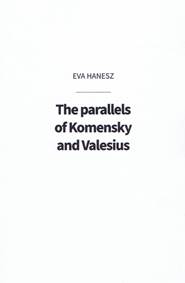
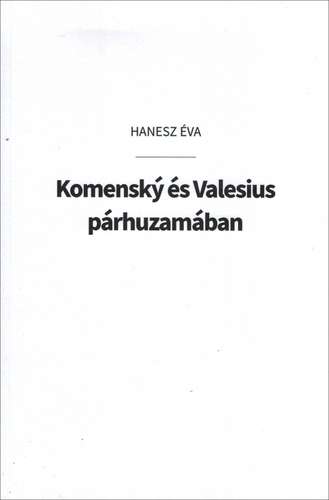
The parallels of Komensky and Valesius
Knihu kúpite v
1 e-shope
od
25,18 €
Ak sa vám po kliknutí na tlačidlo "Do obchodu" nezobrazí stránka knihy vo vybranom e-shope, je potrebné vypnúť AdBlock vo vašom prehliadači pre našu stránku.
Návod na vypnutie je napríklad na adrese https://www.sme.sk/dok/20466299/ako-vypnut-adblock-na-sme-sk-whitelist.
Krátky popis
I dedicate this short study of about 72 pages to pastors, teachers
of religion, pedagogues and teachers, as well as to everyone who
likes to dive into history. We write the 1500-1600s, when the story
takes place, when – to counter the excesses of the Catholic Church
– a new religious trend is emerging, the Reformation, which is
gaining more and more attention in Europe. It also has many
followers in Bohemia (the Czech Republic). In this work, I present
this process through the life paths of two great personalities. The
first Ján Amos Komenský, who was born on March 28, 1592 in Nivnice
near Uherský Brod, took his name from the nearby village of Komna.
He was an exceptional talent for his time. He was 26 years old when
he was ordained a minister. But when the Habsburgs came to the
scene in 1627, a law was passed in Bohemia stating that Catholicism
was the official religion and that those who did not accept it had
to leave the country, so he left his homeland. He is looking for
his place in Europe, but he always wanted to return home. He is
known as a teacher and preacher. He wrote a lot of pedagogical
works, just to name a few... during his stations, e.g. he also
visited Sárospatak, where he reformed the school system, although
his secret plan was to persuade the Rákóczis to raise up the flag.
However, this did not work. He died in Amsterdam in 1670, his grave
is in Naarden. In the meantime, János Antal Valesius also appears,
who, due to the aforementioned persecutions of Protestants, was
born in Szkalice in 1662 as the child of second-generation Czech
emigrant parents. He too never stopped to get back to his homeland,
during his life. His life path also testifies this. He selected
talented young people, whom he taught in Debrecen and Pápa in
higher sciences, so that they could preach the Protestant faith on
their return to Bohemia. But when one of his disciples, György
Jessenius, was ordained by him as a pastor in the church in Réthe,
thereby taking on the office of the bishop, he causes displeasure
among the Catholic priests, so he is arrested in the night of 1740
in his Ócsa parish and thrown into the prison of Komárom Castle,
from where only more than after a year is he released, by Maria
Theresia's request for mercy, and they let him know that this can
never happen again. The last station of his life was Nagykeszi,
where he died at the age of 95, and he is also buried here. The
persecution of the Protestants ended only in 1781 by II. Joseph’s
Patent of Toleration. Neither Komenský nor Valesius could lived
this. In the book, I explain whether Valesius was a bishop or not.
He was not a bishop, he took the episcopal office as a dean only
when he was ordinating a pastor. But he still created greatness.
About 139 publications have survived for posterity. His book is
worth reading. And these two men are parallel because, although
they did not live at the same time, the goal was the same for both
of them, they worked on the same matter. I can state that with
Valesius' actions he was the first Hungarian-speaking Czech
"bishop". And it deserves its rightful place in history.
Výber kníh autora
Hanesz Éva
Zobraziť všetky knihy autora
Hanesz Éva
Výber kníh vydavateľa
Eva Haneszová
Zobraziť všetky knihy vydavateľa
Eva Haneszová
Naše tipy