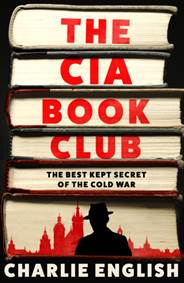
The CIA Book Club
Knihu kúpite v
1 e-shope
od
22,75 €
Ak sa vám po kliknutí na tlačidlo "Do obchodu" nezobrazí stránka knihy vo vybranom e-shope, je potrebné vypnúť AdBlock vo vašom prehliadači pre našu stránku.
Návod na vypnutie je napríklad na adrese https://www.sme.sk/dok/20466299/ako-vypnut-adblock-na-sme-sk-whitelist.
Krátky popis
A Book of the Year in the Daily Telegraph and Economist 'This book
reads like a spy novel' FINANICAL TIMES 'Entertaining and vivid'
OBSERVER 'Reads like a thriller' THE SUN
–––––––––––––––––––––––––––––––––––- The astonishing story of the
ten million books that were smuggled across the Iron Curtain during
the Cold War. For almost five decades after the Second World War,
Europe was divided by the longest and most heavily guarded border
on earth. The Iron Curtain, a near-impenetrable barrier of wire and
wall, tank traps, minefields, watchtowers and men with dogs,
stretched for 4,300 miles from the Arctic to the Black Sea.No
physical combat would take place along this frontier: the risk of
nuclear annihilation was too high for that. Instead, the conflict
would be fought in the psychological sphere. It was a battle for
hearts, minds and intellects.No one understood this more clearly
than George Minden, the head of a covert intelligence operation
known as the ‘CIA books programme’, which aimed to win the Cold War
with literature. From its Manhattan headquarters, Minden’s global
CIA ‘book club’ would infiltrate millions of banned titles into the
Eastern Bloc, written by a vast and eclectic list of authors,
including Hannah Arendt and Aleksandr Solzhenitsyn, George Orwell
and Agatha Christie. Volumes were smuggled on trucks and aboard
yachts, dropped from balloons, and hidden in the luggage of
hundreds of thousands of individual travellers.Once inside Soviet
bloc, each book would circulate secretly among dozens of
like-minded readers, quietly turning them into dissidents.
Latterly, underground print shops began to reproduce the books,
too. By the late 1980s, illicit literature in Poland was so
pervasive that the system of communist censorship broke down, and
the Iron Curtain soon followed.Charlie English tells this true
story of spycraft, smuggling and secret printing operations for the
first time, highlighting the work of a handful of extraordinary
people who risked their lives to stand up to the intellectual
strait-jacket Stalin created. People like Miroslaw Chojecki, an
underground Polish publisher who endured beatings, force-feeding
and exile in service of this mission. And Minden, the CIA’s
mastermind, who didn’t waver in his belief that truth, culture, and
diversity of thought could help free the ‘captive nations’ of
Eastern Europe.This is a story about the power of the printed word
as a means of resistance and liberation. Books, it shows, can set
you free.
Výber kníh autorov
HarperCollins Publishers ,
English Charlie


Zobraziť všetky knihy autora
HarperCollins Publishers,
English Charlie
Výber kníh vydavateľa
Slovart
Zobraziť všetky knihy vydavateľa
Slovart
Naše tipy