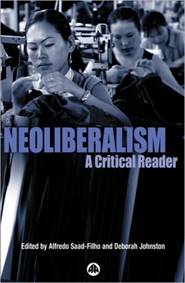
Neoliberalism
Knihu kúpite v
1 e-shope
od
37,00 €
Ak sa vám po kliknutí na tlačidlo "Do obchodu" nezobrazí stránka knihy vo vybranom e-shope, je potrebné vypnúť AdBlock vo vašom prehliadači pre našu stránku.
Návod na vypnutie je napríklad na adrese https://www.sme.sk/dok/20466299/ako-vypnut-adblock-na-sme-sk-whitelist.
Krátky popis
Neoliberalism is the dominant ideology shaping our world today. It
dictates the policies of governments, and shapes the actions of key
institutions such as the WTO, IMF, World Bank and European Central
Bank. Its political and economic implications can hardly be
overstated.Yet there are obvious problems with the neoliberal
project. This book is a perfect introduction to neoliberalism that
is ideal for anyone seeking a critical perspective. It explains the
nature, history, strengths, weaknesses and implications of
neoliberalism from the point of view of radical political
economics.Short, self-contained chapters are written by leading
experts in each field. The books is organised in three parts: the
first section outlining neoliberal theory, the second exploring how
neoliberalism has affected various policy areas, and a third
looking at how neoliberal policies have played out in particular
regions of the world. Using a broad range of left economic
perspectives, from post-Keynesian to Marxist, this is a great
resource for students of politics and economics, and anyone looking
for a grounded critical approach to this broad subject.Yet there
are obvious problems with the neoliberal project. This book is a
perfect introduction to neoliberalism that is ideal for anyone
seeking a critical perspective. It explains the nature, history,
strengths, weaknesses and implications of neoliberalism from the
point of view of radical political economics.Short, self-contained
chapters are written by leading experts in each field. The books is
organised in three parts: the first section outlining neoliberal
theory, the second exploring how neoliberalism has affected various
policy areas, and a third looking at how neoliberal policies have
played out in particular regions of the world. Using a broad range
of left economic perspectives, from post-Keynesian to Marxist, this
is a great resource for students of politics and economics, and
anyone looking for a grounded critical approach to this broad
subject. of politics and economics, and anyone looking for a
grounded critical approach to this broad subject.
Výber kníh autora
neuvedený autor








Zobraziť všetky knihy autora
neuvedený autor
Výber kníh vydavateľa
Slovart

Zobraziť všetky knihy vydavateľa
Slovart
Naše tipy