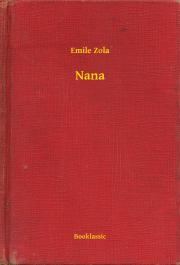
Nana - Émile Zola
Knihu kúpite v
3 e-shopoch
od
0,88 €
Ak sa vám po kliknutí na tlačidlo "Do obchodu" nezobrazí stránka knihy vo vybranom e-shope, je potrebné vypnúť AdBlock vo vašom prehliadači pre našu stránku.
Návod na vypnutie je napríklad na adrese https://www.sme.sk/dok/20466299/ako-vypnut-adblock-na-sme-sk-whitelist.
Krátky popis
Nana is a novel by the French naturalist author Émile Zola.
Completed in 1880, Nana is the ninth installment in the 20-volume
Les Rougon-Macquart series, which was to tell "The Natural and
Social History of a Family under the Second Empire."The novel was
an immediate success. Le Voltaire, the French newspaper that was to
publish it in installments from October 1879 on, had launched a
gigantic advertising campaign, raising the curiosity of the reading
public to a fever pitch. When Charpentier finally published Nana in
book form in February 1880, the first edition of 55,000 copies was
sold out in one day. Flaubert and Edmond de Goncourt were full of
praise for Nana. On the other hand, a part of the non-reading
public, spurred on by some critics, reacted to the book with
outrage. While the novel is held up as a fine example of writing,
it is not especially true to Zola's touted naturalist philosophy;
instead, it is one of the most symbolically complex of his novels,
setting it apart from the earthy "realism" of L'Assommoir or the
more brutal "realism" of La Terre (1887). However, it was a great
deal more authentic than most contemporary novels about the
demimonde.Nana is especially noted for the crowd scenes, of which
there are many, in which Zola proves himself a master of capturing
the incredible variety of people. Whereas in his other novels --
notably Germinal (1885) -- he gives the reader an amazingly
complete picture of surroundings and the lives of characters, from
the first scene we are to understand that this novel treads new
ground.Flaubert summed up the novel in one perfect sentence: Nana
tourne au mythe, sans cesser d'etre réelle. (Nana turns into myth,
without ceasing to be real.) From Wikipedia
Vývoj ceny
Aktuálna Ø cena knihy Nana - Émile Zola je 1,52 €
Výber kníh autora
Émile Zola







Zobraziť všetky knihy autora
Émile Zola
Výber kníh vydavateľa
Kossuth Kiadó







Zobraziť všetky knihy vydavateľa
Kossuth Kiadó
Naše tipy