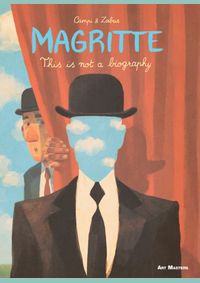
Magritte
Knihu kúpite v
1 e-shope
od
12,83 €
Ak sa vám po kliknutí na tlačidlo "Do obchodu" nezobrazí stránka knihy vo vybranom e-shope, je potrebné vypnúť AdBlock vo vašom prehliadači pre našu stránku.
Návod na vypnutie je napríklad na adrese https://www.sme.sk/dok/20466299/ako-vypnut-adblock-na-sme-sk-whitelist.
Krátky popis
Magritte is published in association with a major survey of the
work of the pioneering Belgian surrealist artist at the Art Gallery
of New South Wales, Sydney.René Magritte (1948–1967) is renowned
for his thought-provoking and enigmatic paintings that challenge
the viewer's perception of reality. His exploration of the
subconscious and the juxtaposition of ordinary objects in surreal
contexts have left an indelible mark on the art world, influencing
generations of artists and thinkers. The exhibition is the first
Magritte retrospective to be presented in Australia and includes
approximately 100 artworks drawn from public and private
collections in the Asia–Pacific, Europe and the United States. The
accompanying book provides an engaging, accessible and in-depth
survey of Magritte’s practice, giving audiences insights into the
evolution of his art from the early 1920s until his final works of
the 1960s. The book features reproductions of the 100+ works in the
exhibition alongside rarely seen archival materials, commercial
work and photography. The images are accompanied by four essays and
an interview with Magritte (originally recorded for Belgian
television in 1965), which together offer nuanced perspectives on
the aesthetic foundations of his work while also considering the
social and artistic context for his practice.An essay by the
curator of Magritte, Nicholas Chambers, leads us through the arc of
the exhibition, revealing the artist’s extraordinary capacity for
innovation and reinvention. Xavier Canonne, an expert on Belgian
surrealism, focuses on the artist’s milieux during the formative
period of the 1920s. Natalie Dupecher, associate curator of modern
art at the Menil Collection in Houston, picks up the story in the
1930s and considers the reception and promotion of Magritte’s art
outside of Europe. And Belgian art historian Julie Waseige reflects
on a key, underlying theme of the artist’s practice: his remarkable
use of humour. Additionally, an extensive illustrated chronology
compiled by Tai Spruyt charts the artist’s eventful life and
career.
Výber kníh autora
neuvedený autor




Zobraziť všetky knihy autora
neuvedený autor
Výber kníh vydavateľa
Slovart
Zobraziť všetky knihy vydavateľa
Slovart
Naše tipy