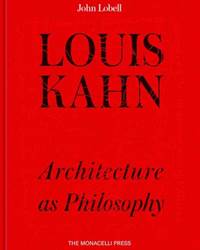
Louis Kahn
Knihu kúpite v
1 e-shope
od
47,50 €
Ak sa vám po kliknutí na tlačidlo "Do obchodu" nezobrazí stránka knihy vo vybranom e-shope, je potrebné vypnúť AdBlock vo vašom prehliadači pre našu stránku.
Návod na vypnutie je napríklad na adrese https://www.sme.sk/dok/20466299/ako-vypnut-adblock-na-sme-sk-whitelist.
Krátky popis
For everyone interested in the enduring appeal of Louis Kahn, this
book demonstrates that a close look at how Kahn put his buildings
together will reveal a deeply felt philosophy. Louis I. Kahn is one
of the most influential and poetic architects of the twentieth
century, a figure whose appeal extends beyond the realm of
specialists. In this book, noted Kahn expert John Lobell explores
how Kahn's focus on structure, respect for materials, clarity of
program, and reverence for details come together to manifest an
overall philosophy. Kahn's work clearly conveys a kind of
",transcendent rootedness",--a rootedness in the fundamentals of
architecture that also asks soaring questions about our experience
of light and space, and even how we fit into the world. In Louis
Kahn: The Philosophy of Architecture, John Lobell seeks to reveal
how Kahn's buildings speak to grand humanistic concerns.Through
examinations of five of Kahn's great buildings--the Richards
Medical Research Building in Philadelphia, the Salk Institute for
Biological Studies in La Jolla, the Phillips Exeter Academy Library
in New Hampshire, the Kimbell Art Museum in Fort Worth, and the
Yale Center for British Art in New Haven--Lobell presents a clear
but detailed look at how the way these buildings are put together
presents Kahn's philosophy, including how Kahn wishes us to
experience them. An architecture book that touches on topics that
addresses the universal human interests of consciousness and
creativity, Louis Kahn: The Philosophy of Architecture helps us
understand our place and the nature of well-being in the built
environment.
Výber kníh autora
neuvedený autor








Zobraziť všetky knihy autora
neuvedený autor
Výber kníh vydavateľa
Slovart

Zobraziť všetky knihy vydavateľa
Slovart
Naše tipy