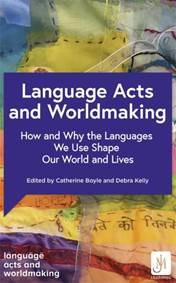
Language Acts and Worldmaking
Knihu kúpite v
1 e-shope
od
47,45 €
Ak sa vám po kliknutí na tlačidlo "Do obchodu" nezobrazí stránka knihy vo vybranom e-shope, je potrebné vypnúť AdBlock vo vašom prehliadači pre našu stránku.
Návod na vypnutie je napríklad na adrese https://www.sme.sk/dok/20466299/ako-vypnut-adblock-na-sme-sk-whitelist.
Krátky popis
Collectively authored by the Language Acts and Worldmaking team,
this defining volume offers reflective narratives on research,
theory and practice over the course of the flagship project of the
same name, funded by the Arts and Humanities Research Council's
Open World Research Initiative. It returns to the project's key
principles - that our words make worlds and we are agents in
worldmaking - analyses the practices and outcomes of collaborative
working, and looks to the future by offering concrete ideas for how
the work they have done can now continue to do its work in the
world. Focusing on the key research strands, this volume looks at
the role of the language teacher as a mediator between languages
and cultures, worldmaking in modern languages, translation and the
imagination, languages and hospitality, digital mediations, and how
words change and make worlds.Critically, it analyses the impact on
communities of living in multilingual cities, and the ways in which
learning a first language, and then a second, and so on, plays a
crucial role in our ability to understand our culture in relation
to others and to appreciate the ways in which they are intertwined.
Specific aims are to: * propose new ways of bridging the gaps
between those who teach and research languages and those who learn
and use them in everyday contexts from the professional to the
personal * put research into the hands of wider audiences * share a
philosophy, policy and practice of language teaching and learning
which turns research into action * provide the research, experience
and data to enable informed debates on current issues and attitudes
in language learning, teaching and research * share knowledge
across and within all levels and experiences of language learning
and teaching * showcase exciting new work that derives from
different types of community activity and is of practical relevance
to its audiences * disseminate new research in languages that
engages with diverse communities of language practitioners.
Výber kníh autora
neuvedený autor

Zobraziť všetky knihy autora
neuvedený autor
Výber kníh vydavateľa
Slovart
Zobraziť všetky knihy vydavateľa
Slovart
Naše tipy