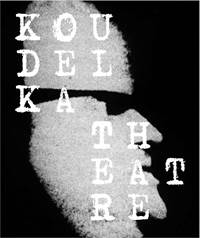
Josef Koudelka: Koudelka Theatre
Knihu kúpite v
1 e-shope
od
37,00 €
Ak sa vám po kliknutí na tlačidlo "Do obchodu" nezobrazí stránka knihy vo vybranom e-shope, je potrebné vypnúť AdBlock vo vašom prehliadači pre našu stránku.
Návod na vypnutie je napríklad na adrese https://www.sme.sk/dok/20466299/ako-vypnut-adblock-na-sme-sk-whitelist.
Krátky popis
'Moving among the actors on set, I was able to take the same scene,
multiple times, but differently. It taught me how to get the most
out of a given situation, and I have continued to apply this method
to my work.' - Josef KoudelkaIn his own words, Josef Koudelka was
not particularly interested in theatre in his youth. When he
arrived in Prague from his Moravian village in the late 1950s, his
focus was on his studies. His interests were airplanes, folk music
and photography, which he practised as an amateur. A classmate
recommended that he meet his uncle, who worked in the editorial
staff of the magazine Divadlo (Theatre), then looking for a
photographer. It was in this context that Josef Koudelka, soon to
become an aeronautical engineer by profession, became a theatre
photographer. In the 1960s, Prague theatres were one of the rare
places in Soviet Czechoslovakia where relative freedom of
expression continued. Following the Prague Spring (1968), these
stages were forced to close, and their animators dissented or left
the country. There is a rich correlation of levels between
Koudelka’s theatrical photography and his later way of conceiving
his images as a reflection on the theatre of the world. Everything
that we know of his practice of the image can be found from his
beginnings in the work he did in Prague in the 1960s: his attention
to graphic composition, his ease of working in tight spaces among
people in movement and in difficult lighting situations, his
obsession with returning again and again to the same motif, the
same gestures and rituals.
Výber kníh autora
neuvedený autor


Zobraziť všetky knihy autora
neuvedený autor
Výber kníh vydavateľa
Slovart
Zobraziť všetky knihy vydavateľa
Slovart
Naše tipy