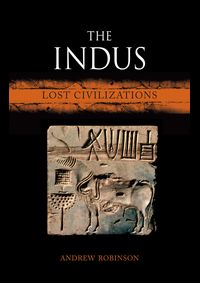
Indus
Knihu kúpite v
1 e-shope
od
19,48 €
Ak sa vám po kliknutí na tlačidlo "Do obchodu" nezobrazí stránka knihy vo vybranom e-shope, je potrebné vypnúť AdBlock vo vašom prehliadači pre našu stránku.
Návod na vypnutie je napríklad na adrese https://www.sme.sk/dok/20466299/ako-vypnut-adblock-na-sme-sk-whitelist.
Krátky popis
When the Greek army of Alexander the Great invaded the valley of
the Indus river in the fourth century BC, it was wholly unaware
that this region of northwest India had once been the centre of a
civilization worthy of comparison with those of ancient Egypt and
Mesopotamia. The Indus civilization flourished for half a
millennium from about 2600 to 1900 BC, when it mysteriously
declined and vanished from view. It remained invisible for almost
four thousand years, until its ruins were discovered in the 1920s
by British and Indian archaeologists. Today, after almost a century
of excavation, it is regarded as the beginning of Indian
civilization and possibly the origin of Hinduism. More than a
thousand Indus settlements covered at least 800,000 square
kilometres of what is now Pakistan and India: it was the most
extensive urban culture of its age, with a vigorous maritime export
trade to the Persian Gulf and cities such as Ur. The two largest
Indus cities, Harappa and Mohenjo-daro - a UNESCO World Heritage
Site - boasted street planning and house drainage worthy of the
twentieth century AD, including the world s first toilets, along
with complex stone weights, finely drilled gemstone necklaces and
an exquisite part-pictographic writing system, which was carved on
seal stones and has defied numerous attempts at decipherment.
Astonishingly, there is no evidence for armies or warfare. The
Indus: Lost Civilizations is an accessible introduction to every
significant aspect of an extraordinary and tantalizing 'lost'
civilization, which apparently combined artistic excellence,
technological sophistication and economic vigour with social
egalitarianism, political freedom and religious moderation. The
book also discusses the vital legacy of the Indus civilization in
modern India and Pakistan
Výber kníh autorov
Robinson Andrew ,
Reaktion Books





Zobraziť všetky knihy autora
Robinson Andrew,
Reaktion Books
Výber kníh vydavateľa
Slovart

Zobraziť všetky knihy vydavateľa
Slovart
Naše tipy