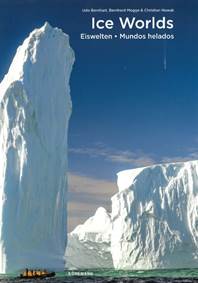
Ice Worlds
Knihu kúpite v
1 e-shope
od
18,95 €
Ak sa vám po kliknutí na tlačidlo "Do obchodu" nezobrazí stránka knihy vo vybranom e-shope, je potrebné vypnúť AdBlock vo vašom prehliadači pre našu stránku.
Návod na vypnutie je napríklad na adrese https://www.sme.sk/dok/20466299/ako-vypnut-adblock-na-sme-sk-whitelist.
Krátky popis
Viewed from space, the Earth appears as a ",blue planet",, its
surface is covered to a large extent by water. The regions around
the South and North Pole are particularly striking. The Antarctic
is almost completely covered by an ice shield up to several
thousand meters (several miles) thick, and in the Arctic, large
areas around the North Pole and Greenland are covered by ice. The
huge ice shelf areas in Antarctica are particularly impressive, but
there is also ice in other parts of the world: even at the equator
high peaks are glaciated. In the mountains, glaciers represent an
essential freshwater reserve that feeds many rivers. Water is a
very special liquid, as it at its highest density and smallest
volume at 4 °C (39 °C). This property, described by physicists as
the anomaly of water, means that ice is lighter than water, which
is why icebergs float on water and lakes freeze on the surface. Ice
forms a hostile environment, but humans and animals have adapted to
life on the ice. Indigenous peoples such as the Inuit in the Arctic
have developed survival strategies over thousands of years.
However, the traditional way of life of Arctic inhabitants is
changing, and they are being forced to adapt. Some species such as
the polar bear are threatened with extinction. This is due to
climate change, which is causing temperatures to rise worldwide,
particularly rapidly in the Arctic and Antarctic. As a result,
glaciers are melting ever more quickly. Ice, which has always
fascinated people with its bizarre beauty, is disappearing, and the
effects on the environment and the economy are serious.
Výber kníh autora
neuvedený autor








Zobraziť všetky knihy autora
neuvedený autor
Výber kníh vydavateľa
Slovart

Zobraziť všetky knihy vydavateľa
Slovart
Naše tipy