Hubris
Knihu kúpite v
1 e-shope
od
30,35 €
Ak sa vám po kliknutí na tlačidlo "Do obchodu" nezobrazí stránka knihy vo vybranom e-shope, je potrebné vypnúť AdBlock vo vašom prehliadači pre našu stránku.
Návod na vypnutie je napríklad na adrese https://www.sme.sk/dok/20466299/ako-vypnut-adblock-na-sme-sk-whitelist.
Krátky popis
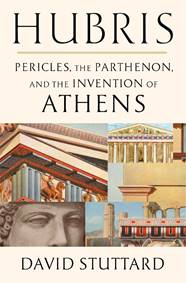
A new perspective on ancient Athens at the height of its powers,
reinterpreting the city’s supposed “Golden Age” as a period of
ruinous culture wars.The age of Pericles, in the fifth century BC,
is often described as the Golden Age of Athens. The city witnessed
a flowering of philosophy, art, and architecture—including an
ambitious building program, with the Parthenon its centerpiece. But
as David Stuttard shows in this vivid account, the seemingly
triumphant city was in fact riven by conflict and contradiction.
Though nominally a democracy, Athens led a tyrannical empire. And
for Pericles and his circle, the Parthenon was less a holy place
than a propaganda vehicle. Its sculptures carried the message that
Athenians, beloved by the gods, were nearly divine in their own
right—which to many Greeks smacked of hubris.As long as things went
well, Athenian democracy appeared to prosper. But just a year after
the Parthenon was finished, Athens was at war with Sparta, a plague
killed a third of the population, including Pericles, and
earthquakes razed much of the city. In the wake of what seemed like
divine retribution, popular outrage against those accused of
undermining state religion was so strong that it took the execution
of Socrates to lance the boil.Hubris offers dramatic portraits of
key figures like Pheidias, who sculpted the monumental statue of
Athena yet fell prey to charges of impiety, Themistocles, who built
the Athenian navy but died an exile in enemy lands, and Alcibiades,
the psychopathic playboy whose mercurial ego hastened his city’s
defeat. To understand the Parthenon and the Athens that built it,
Stuttard makes clear, we must recognize the tensions among the
city’s rivalrous families, generations, and social classes, whose
visions of their place in the world ultimately proved incompatible.
Výber kníh autorov
Harvard University Press ,
David Stuttard








Zobraziť všetky knihy autora
Harvard University Press,
David Stuttard
Výber kníh vydavateľa
Slovart

Zobraziť všetky knihy vydavateľa
Slovart
Naše tipy