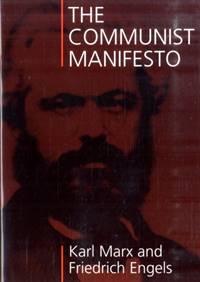
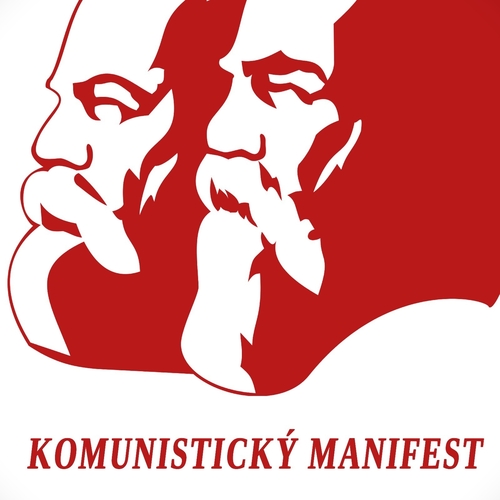
Communist Manifesto
Knihu kúpite v
1 e-shope
od
1,85 €
Ak sa vám po kliknutí na tlačidlo "Do obchodu" nezobrazí stránka knihy vo vybranom e-shope, je potrebné vypnúť AdBlock vo vašom prehliadači pre našu stránku.
Návod na vypnutie je napríklad na adrese https://www.sme.sk/dok/20466299/ako-vypnut-adblock-na-sme-sk-whitelist.
Krátky popis
The Communist Manifesto reflects an attempt to explain the goals of
Communism, as well as the theory underlying this movement. It
argues that class struggles, or the exploitation of one class by
another, are the motivating force behind all historical
developments. Class relationships are defined by an era's means of
production. However, eventually these relationships cease to be
compatible with the developing forces of production. At this point,
a revolution occurs and a new class emerges as the ruling one. This
process represents the ",march of history", as driven by larger
economic forces. Modern Industrial society in specific is
characterized by class conflict between the bourgeoisie and
proletariat. However, the productive forces of capitalism are
quickly ceasing to be compatible with this exploitative
relationship. Thus, the proletariat will lead a revolution.
However, this revolution will be of a different character than all
previous ones: previous revolutions simply reallocated property in
favor of the new ruling class. However, by the nature of their
class, the members of the proletariat have no way of appropriating
property. Therefore, when they obtain control they will have to
destroy all ownership of private property, and classes themselves
will disappear. The Manifesto argues that this development is
inevitable, and that capitalism is inherently unstable. The
Communists intend to promote this revolution, and will promote the
parties and associations that are moving history towards its
natural conclusion. They argue that the elimination of social
classes cannot come about through reforms or changes in government.
Rather, a revolution will be required. The Communist Manifesto has
four sections. In the first section, it discusses the Communists'
theory of history and the relationship between proletarians and
bourgeoisie. The second section explains the relationship between
the Communists and the proletarians. The third section addresses
the flaws in other, previous socialist literature. The final
section discusses the relationship between the Communists and other
parties.
Výber kníh autorov
Karl Marx ,
The Merlin Press Ltd
Zobraziť všetky knihy autora
Karl Marx,
The Merlin Press Ltd
Výber kníh vydavateľa
Slovart
Zobraziť všetky knihy vydavateľa
Slovart
Naše tipy



- Eva Jalakšová Magdaléna
- Johannes Rothkranz
- Mgr. Jana Hirková
- Bedlovičová Danica
- Tajovská Olga
- Lenka Komendová Jaroslava
- Mikael Lindnord
- Kamil Ondroušek Jiří
- Kociánová Ludmila
- Doleček a kolektiv Rajko
- Jennifer Donnellyová
- Kateřina Lichtenberková
- Šrámková Angelika
- Svatoš Martin (ed.)
- Wolfgan Metzger Susanne
- Monika Houšková
- Dorricottová Fran
- Karásová Eva Jaroslava
- Vlastimila Pospíšilová
- Darcy Van Poelgeest
- Chris F. Oliverová