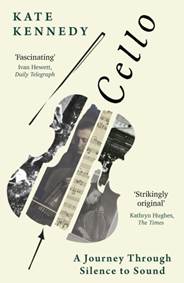
Cello
Knihu kúpite v
1 e-shope
od
15,15 €
Ak sa vám po kliknutí na tlačidlo "Do obchodu" nezobrazí stránka knihy vo vybranom e-shope, je potrebné vypnúť AdBlock vo vašom prehliadači pre našu stránku.
Návod na vypnutie je napríklad na adrese https://www.sme.sk/dok/20466299/ako-vypnut-adblock-na-sme-sk-whitelist.
Krátky popis
'Strikingly original' The Times'Absorbing' Wall Street Journal‘Just
as a cello’s voice is divided across four strings, each with its
own colour and character, this is a journey in four parts, in
search of four players and their instruments...’In Cello, Kate
Kennedy weaves together the lives of four remarkable cellists who
suffered various forms of persecution, injury and misfortune. The
Hungarian Jewish cellist and composer Pál Hermann managed to keep
one step ahead of the Gestapo for much of the Second World War but
was eventually captured and murdered. Lise Cristiani, the first
female professional cello soloist, undertook an epic – and
ultimately fatal – concert tour of Siberia in the 1850s, taking
with her one of the world’s greatest Stradivari cellos.Anita
Lasker-Wallfisch was incarcerated in both Auschwitz and
Bergen-Belsen camps, only surviving because she was the cellist in
the Auschwitz-Birkenau women’s orchestra. Amedeo Baldovino of the
Trieste Piano Trio was forced to jump from a burning ship with his
‘Mara’ Stradivari, losing the cello, and nearly losing his own life
when the boat was shipwrecked off Buenos Aires. Counterpointing the
themes raised by these extraordinary stories are a sequence of
interludes that draw together the author’s reflections on the
nature and history of the cello, and her many interviews and
encounters with contemporary cellists.Kate Kennedy’s own
relationship with the cello is a complicated one. As a teenager,
she suffered an injury to her arm that imposed severe limitations
on her career as a performer on the instrument that was her first
love. She realised that, in order to understand what the cello
meant to her, she needed to find out what the cello – and,
crucially, the absence of the cello – had meant to some other
cellists, past and present.Kate Kennedy has written an eloquent and
multi-textured homage to this warmest of stringed instruments –
part quest narrative, part detective story, part philosophical
meditation.
Výber kníh autorov
Apollo ,
Kate Kennedy

Zobraziť všetky knihy autora
Apollo,
Kate Kennedy
Výber kníh vydavateľa
Slovart
Zobraziť všetky knihy vydavateľa
Slovart
Naše tipy